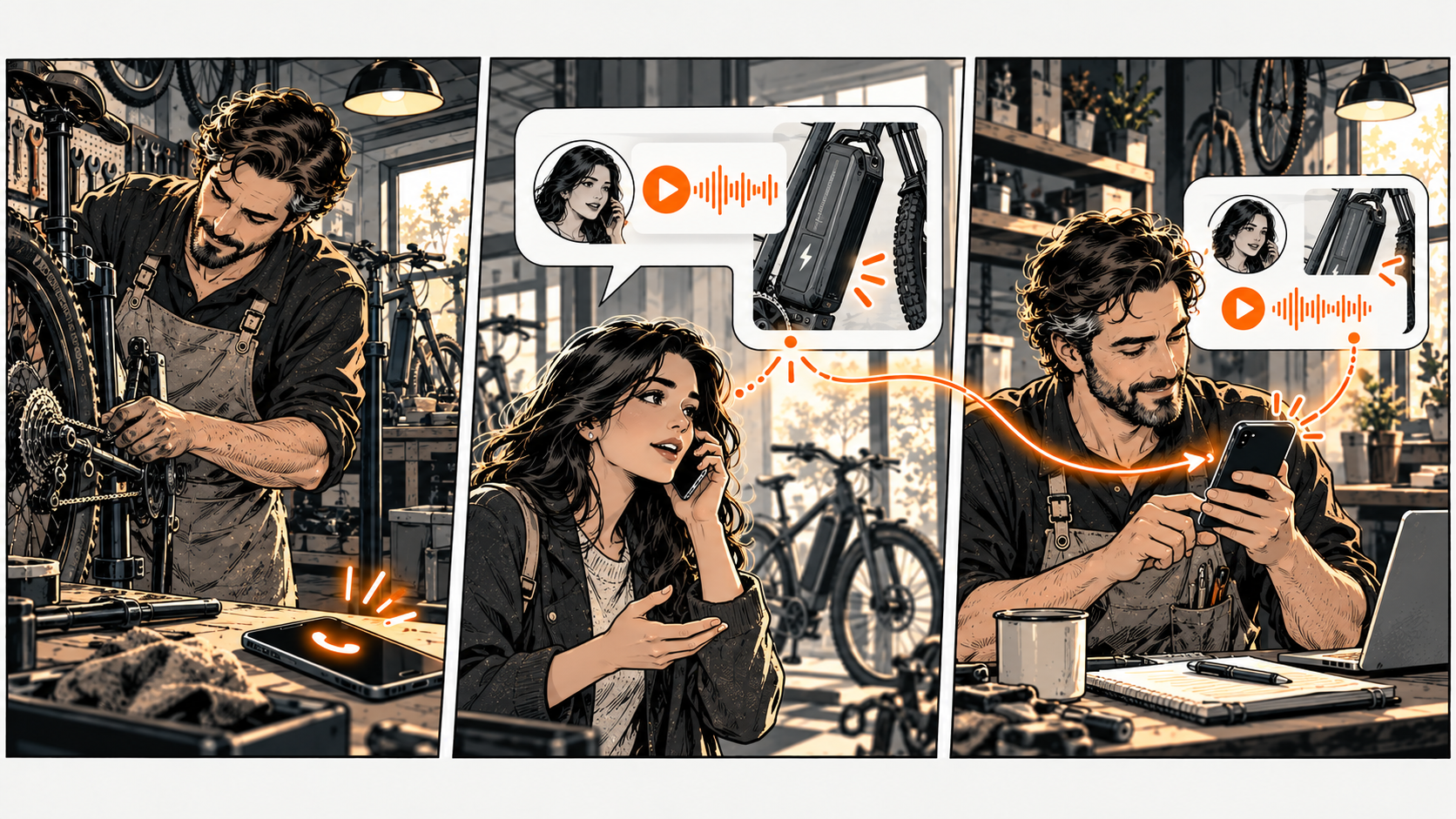
Every missed call is a potential customer waiting
When you can't answer, tell callers which channel is monitored, what info helps you respond, and when they can expect a reply. Then give one person responsibility for checking it.
A missed ring doesn't mean a lost sale. But an unclear next step is something you can fix today.
Imagine a bike repair owner who can't answer while working on a bike. The voicemail still says only 'Leave a message.' A caller wants to know whether the shop repairs electric bikes. They have no guidance about what to include or whether anyone even checks the mailbox.
Listen to what a caller actually hears
Use a test call that won't trigger an emergency service or contact a real customer. Check the number, the greeting, the mailbox space, and the audio clarity. Compare the stated hours with your public pages.
Don't promise a callback window you haven't arranged to meet.
Give the caller enough to act
For the workshop, a useful greeting could ask for a callback number, bike type, and short description of the repair. It could state that messages are checked during posted hours — if that's true. Offer an existing email or inquiry page only when it's monitored. A second abandoned channel doesn't solve the first.
Keep sensitive details out of voicemail instructions. If your work has an urgent route, describe only the service you actually provide. An ordinary callback mailbox should not look like emergency coverage.
Connect your public details to the callback
Check that the number and hours on your DiagBizCard match the route you tested. A card makes contact info easier to find — but your business still owns the response.
Keep a small private record of calls needing action, the responsible person, and whether they were answered. Don't publish caller details.
The Missed Call Recovery Check
Pick one real situation. Copy these five lines into your notes and fill them in. The complete tool is right here — no signup or email needed.
Example: bike repair inquiry / correct workshop number / asks for bike type and callback number / checked during posted shop hours / owner responds / colleague covers agreed absences.
If the mailbox is full or the number is wrong, fix that first. If it works but nobody checks it, assign the responsibility before inviting more messages. Then test again after the fix.
Common questions
Frequently asked questions
Do I need an answering service?
Start with the problem you observed. A corrected greeting and a reliable callback process might be enough. Additional coverage is a separate decision when demand or urgency requires it.
Should I call back every unknown number?
Follow your business's agreed callback process and the context you actually have. A missed number alone doesn't tell you what the caller wanted.