Start with what they actually asked for
Use follow-up to carry an agreed task forward. Check what the customer wanted, which channel is appropriate, and when they asked to hear from you. Add information that helps their decision.
Silence isn't permission for repeated contact.
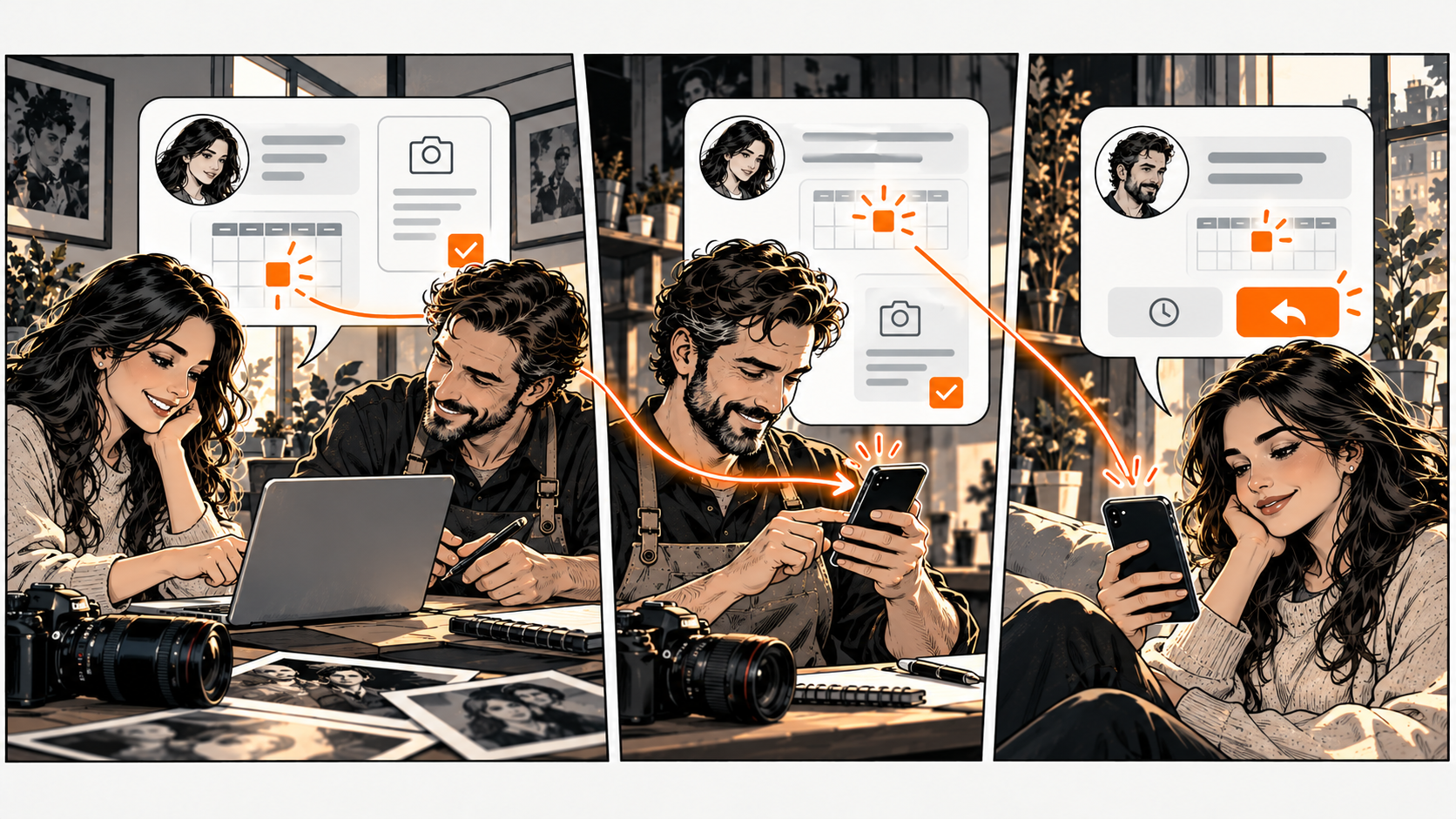
A photographer sends a quote after a customer asks about family portraits. The customer says they need to check a date and would welcome one reminder next week. A relevant reminder can reference that date and offer to answer the remaining question. A daily 'just checking in' sequence ignores the agreement.
Draft the next message before adding a sequence
A useful draft names the previous discussion, gives the promised information, and offers a simple choice.
For the photographer: 'You mentioned checking the date for your family session. Would you like me to clarify anything in the quote, or should I leave it with you?' Use that only when it matches the actual exchange.
Keep price, availability, and other changing details current. Don't imply a reservation exists when it doesn't. Keep customer info in your approved private system — the example here is fictional.
Treat returning customers and old contacts differently
A completed job may need agreed aftercare or service info. A past customer may have no reason to buy again now. A dormant contact may no longer welcome outreach. Check the relationship, permission, and purpose before reconnecting.
An agreed service update isn't a blank cheque for marketing. Honor opt-outs and channel preferences. Check the rules that apply to your situation before sending commercial messages — this worksheet isn't a legal eligibility determination.
Know when the work is finished
Name the person handling replies. Stop at a decline, an opt-out, or the end of the agreed follow-up. If a customer chooses to wait, respect that — don't manufacture urgency.
Your DiagBizCard can help someone keep your contact details. Saving a card doesn't establish marketing permission or activate a follow-up workflow.
The Useful Follow-Up Note
Pick one real situation. Copy these five lines into your notes and fill them in. The complete tool is right here — no signup or email needed.
Example: portrait quote and date check / clarify quote if needed / one reminder next week through the agreed channel / photographer handles reply / decline, opt-out, or no further follow-up beyond the agreement.
If you can't name a relevant purpose or permission, pause the outreach. If the draft repeats a generic nudge, replace it with the promised information or leave the choice with the customer.
Common questions
Frequently asked questions
How many reminders should I send?
Use the actual agreement and applicable rules. There's no universal cadence — don't treat non-response as a reason to escalate pressure.
Does a past purchase permit every future message?
Don't assume that. Check the message purpose, customer preference, and applicable contact rules before outreach.